 Art Scanner
Shop stickers
Barcodes and product codes come from shops selling decorative prints. Gallery and framer labels are worth photographing.
Paint has height, a print is flat. Tilt the piece under a lamp, zoom in on the surface, then check the edges and the back. If three of the six checks below point the same way, you have your answer. It matters, because a print rarely sells for more than a few hundred dollars.
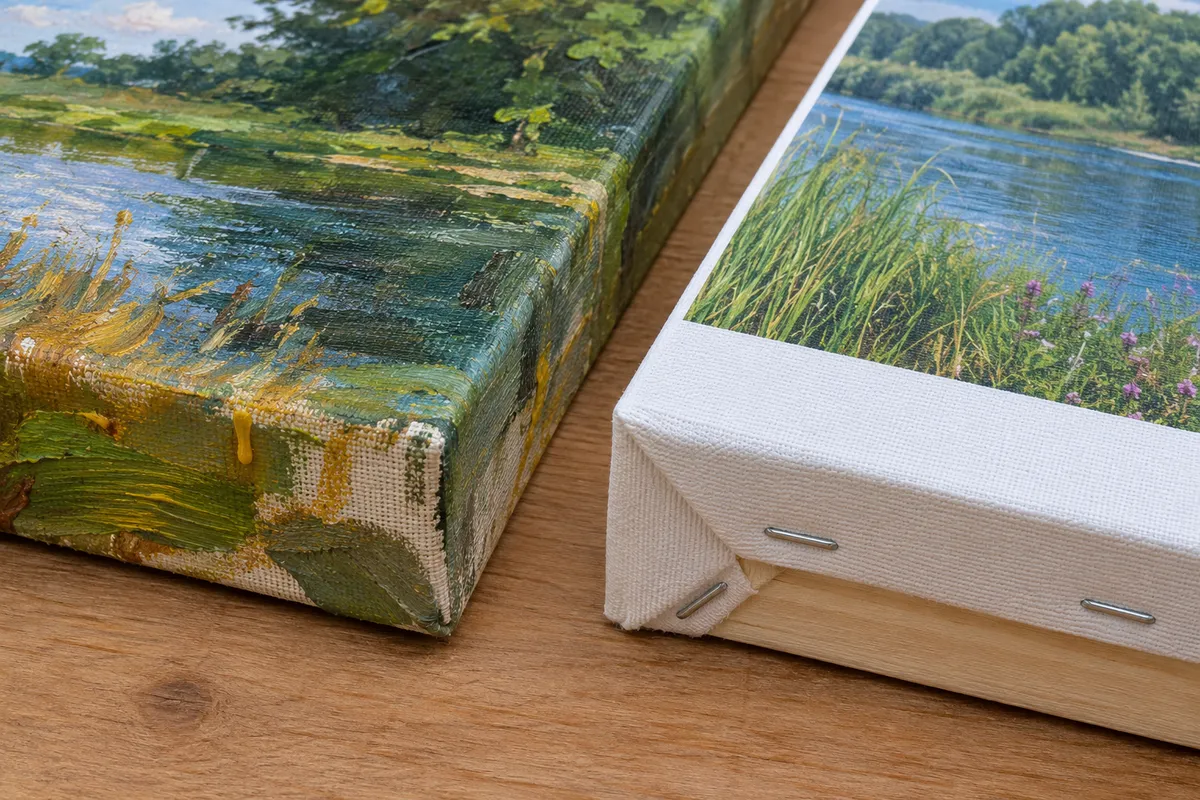
Hold a lamp or phone torch low and to one side. Oil and acrylic paint stand up from the canvas, so each stroke throws a small shadow. A print looks like a photo of brushstrokes: the shading is there, the height is not.
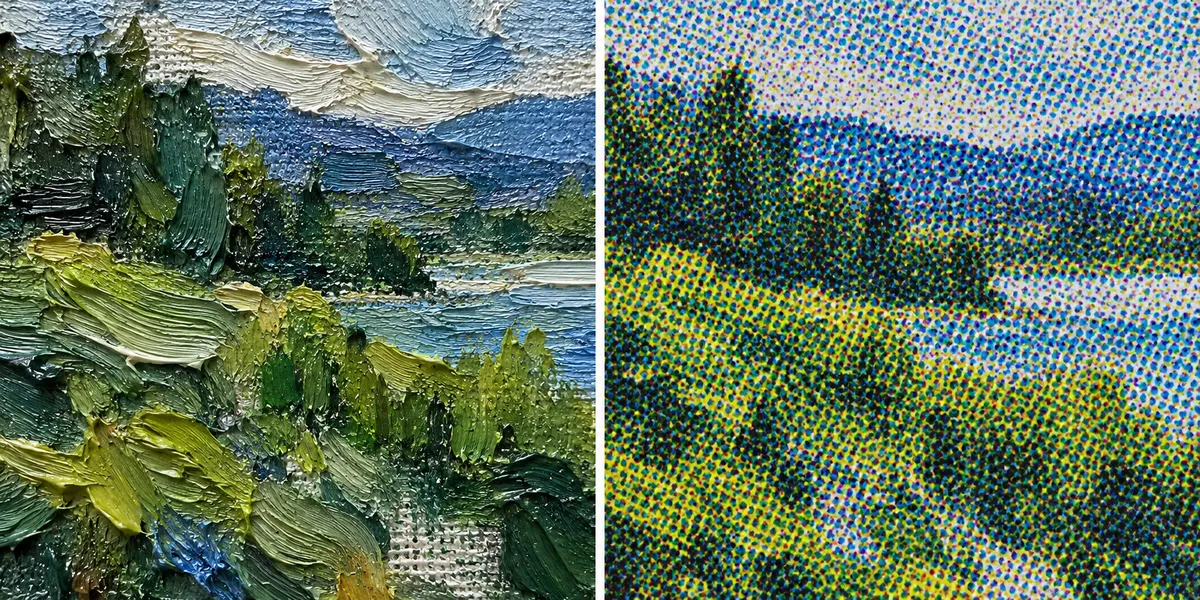
Use a magnifier or your phone camera at full zoom, on a flat area such as the sky. Paint shows mixed colours with no pattern. Prints show dots: a regular rosette on posters and offset prints, finer scattered dots on inkjet and giclée prints.
Paint rarely stops neatly. On an original you often see brush marks running onto the sides, bare canvas in spots, or drips. A canvas print either stops in a perfectly straight line at the front edge or wraps the picture round the sides as a flat mirror of the front.
Some prints get clear gel brushed on top to look painted. Tilt it again: if the raised strokes run in a different direction from the shapes in the picture, or the texture is clear while the colour under it is flat, it is a textured print.
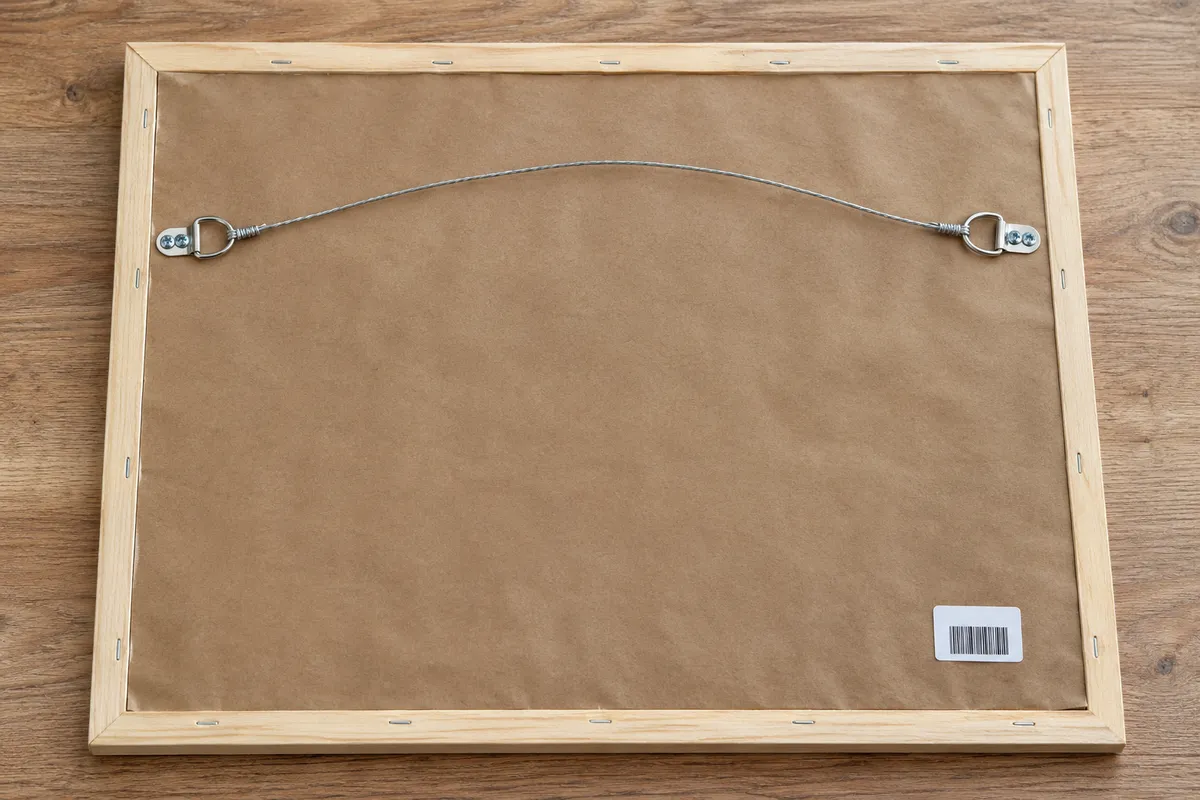
The back shows how it was made and roughly when.
Barcodes and product codes come from shops selling decorative prints. Gallery and framer labels are worth photographing.
Dark, worn stretcher bars and tacks point to an older piece. Bright new wood and staples point to a recent one, print or not.
Stray paint or a few test strokes on the back or sides are a good sign of a real painting.
A signature painted in the same flat finish as the picture was printed with it. A pencil signature in the margin with a number like 25/150 marks a signed, limited-edition print. How to identify an artist by the signature covers the search.
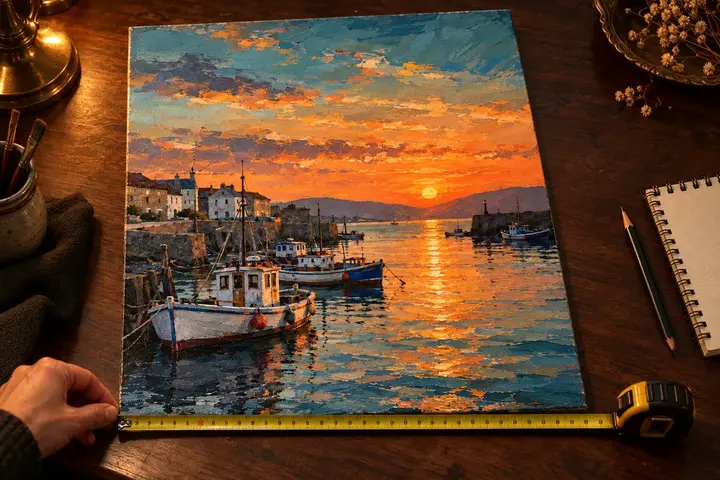
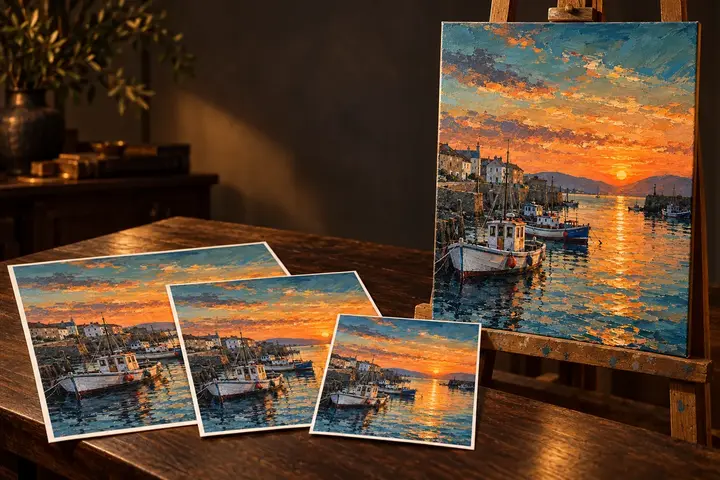
Scan a piece the app cannot name and it gives a first answer to “original or print?” with the visible reason, along with age, signature and style. Here is the real result for the printed canvas above.
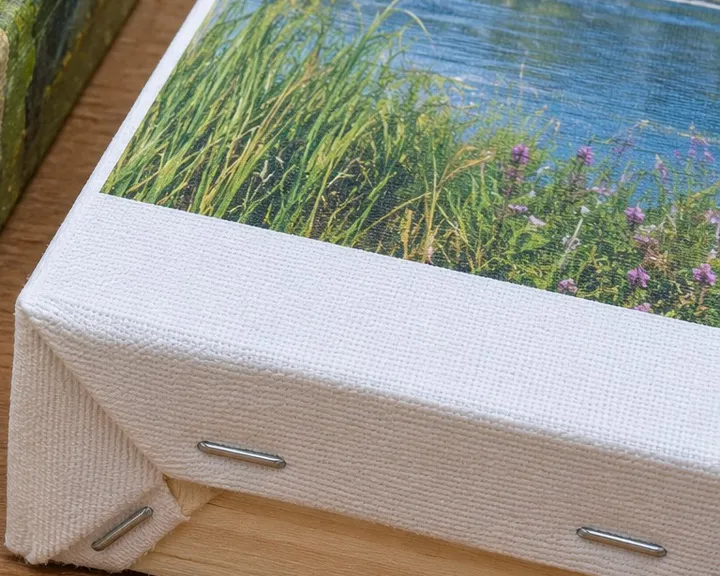
The example photos were made for this guide; the app was given only the printed canvas on the right. The report is what it returned on 4 November 2026. A check from a photo, not an authentication. If it is an original, see what it could be worth.
Look at the side edges and tilt the front under a lamp. Paint wraps unevenly round the edges and has ridges that catch the light. A canvas print has a straight, clean edge where the picture stops or wraps in a perfect line, and its surface is flat except for any clear gel added on top.
No. A giclée is a high-quality inkjet print, usually on canvas or fine paper. Artists often sign and number them, which makes them limited-edition prints. They can be worth more than a poster, but much less than the painting they copy.
A pencil signature and a number such as 25/150 mean the artist approved a limited edition. The value depends on the artist and the edition size. For most decorative prints that is tens to a few hundred dollars.
Real watercolour sits in the paper: you see pooled edges where the water dried, pencil lines under the paint and paper texture all the way through. Take it out of the glass if you can. Under a magnifier a print shows dots, a watercolour shows none.
Art Scanner gives a first answer from your photo: likely hand-painted, likely a print or hard to tell, with the visible reason. A close-up and a photo of the back make it more reliable. It is a check from a photo, not an authentication.
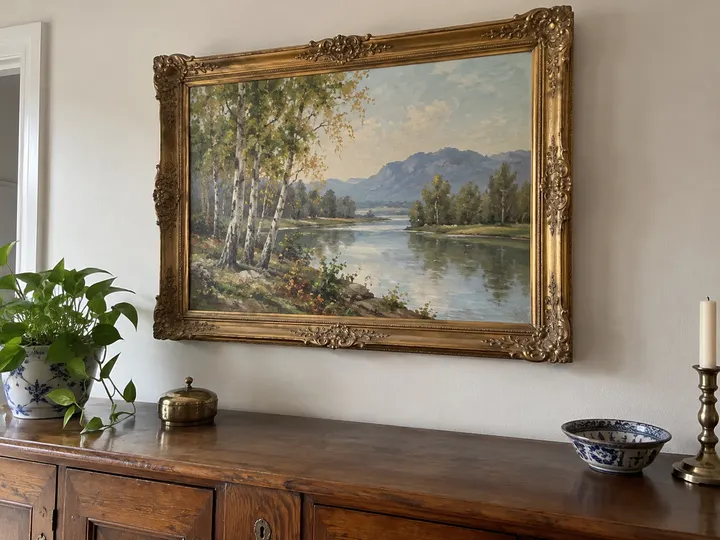 Is my painting valuable?Found one at home or a thrift shop? What it is likely worth.
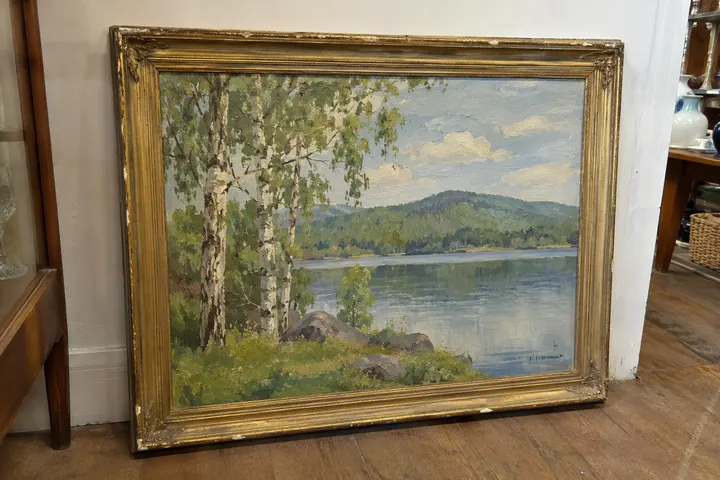 What is my old painting worth?The 9 most common finds and their price ranges.
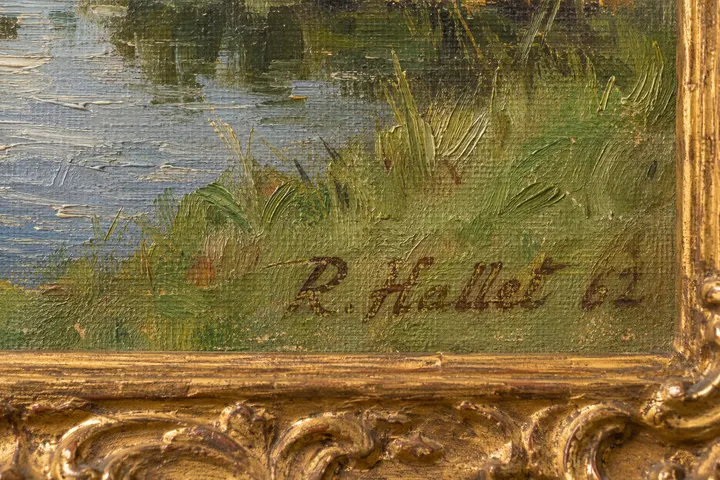 Find the artist by signatureRead a signature, then look it up for free.
 How to price your artFree calculator: price by size, surface and skill level.
 Prints and commissionsPrint prices and a commission sheet by size.
 Famous painting pricesWhat 59 famous paintings and prints sold for, or why they have no price.
 Etsy vs eBay for artFees side by side and what you keep from a sale.