 Art Scanner
Raised brushstrokes
Ridges of paint that catch the light from the side, with the canvas weave showing between them.
Most paintings found at home or in a thrift shop sell for $10–$300. Three things move one higher: it is a real original rather than a print, its signature leads to an artist with auction sales, and it is in good condition. Check them in the order below.

Before any artist name, the type of object sets what a painting can sell for. These are the resale ranges Art Scanner starts from: what a piece actually sells for at auction, on eBay or in a second-hand shop, not retail or insurance value.
Take the painting off the wall and tilt it under a lamp. Paint has height. A print is flat, and up close it is made of dots.

Ridges of paint that catch the light from the side, with the canvas weave showing between them.
A regular dot pattern, even in the sky, means it was printed. Your phone camera zoomed in works too.
Glass and a smooth, even surface usually mean paper. Oil paintings are rarely framed under glass.
Some prints have a few brushstrokes painted over them. If the strokes do not match the picture under them, it is a print.
The back of the canvas often says more than the front: who sold it, who framed it, roughly when it was made.
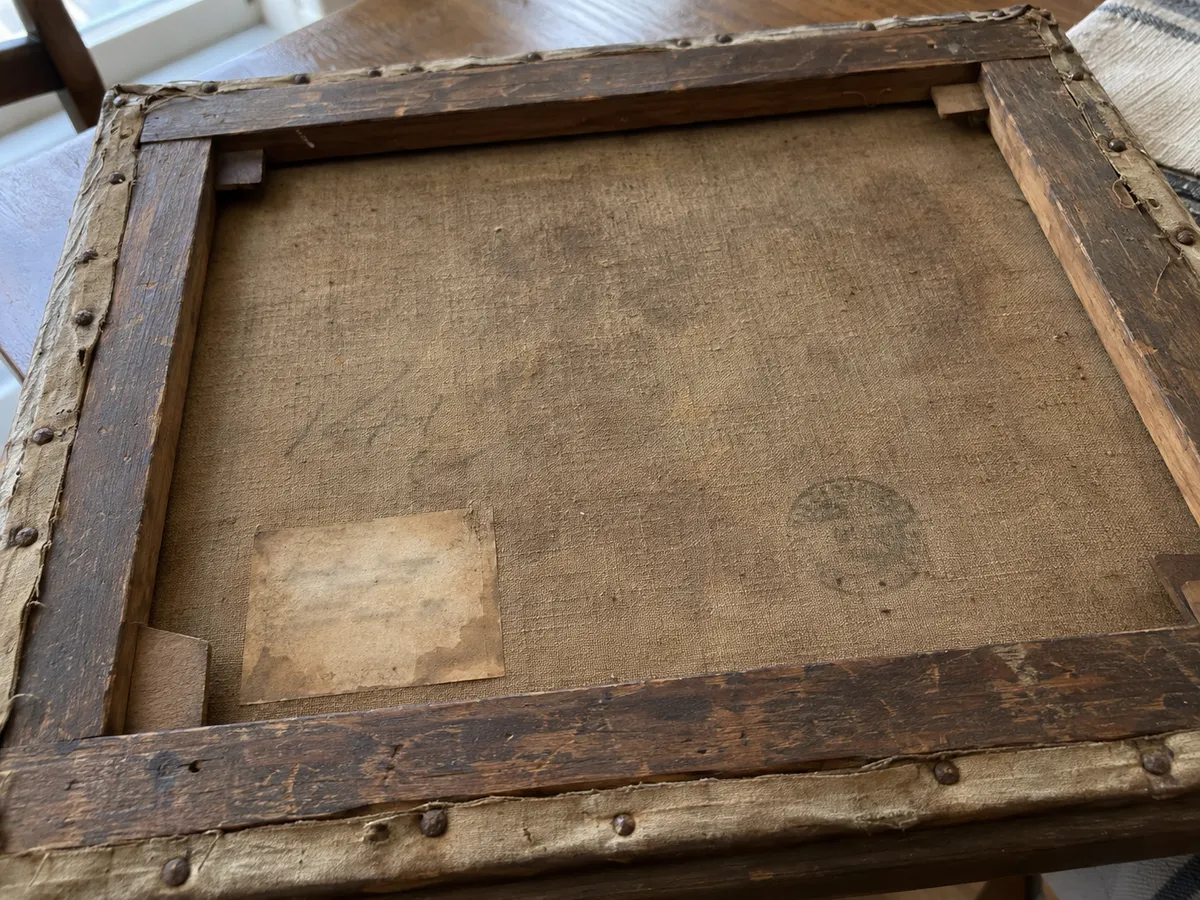
Gallery, framer or exhibition labels can name the artist and the place it was sold. Photograph them before anything else.
Pencil titles, names or dates, and stamps from the canvas maker. Search any name or place you can read.
Dark, worn stretcher bars and tacks point to an older piece. Bright new wood and staples point to a recent one.
A signature only adds value if it leads to an artist whose work has sold. Here is how to check.
An artist with public auction sales is often called a “listed artist”. That record is what moves a painting from hundreds into thousands.
An appraisal is paid work, so it makes sense only when the piece could be worth clearly more than it costs.
A signed original by an artist with auction sales, old gallery labels or papers, or a piece a family story says is important.
A decorative print, a copy of a famous painting, or an unsigned piece with nothing on the back.
Many auction houses look at photos for free when they would sell the piece. Send the front, back, signature and size.
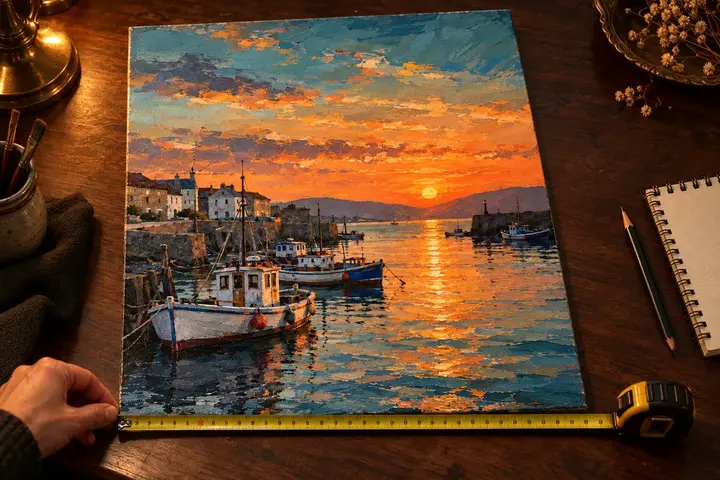
Scan a painting the app cannot name and it gives you a best guess at what it is, an estimated value range and an original-or-print check. Here is the real result for the example above.

The object in your photo: likely an original
Condition (from photo): Good
Consider a professional appraisal of a signed original: by a listed artist it could be worth far more than this range.
Original or reproduction?Raises value: Appears to be an original oil on canvas · Good condition of the painting and the gold frame
Lowers value: The artist is unknown · Many unattributed landscapes sell at lower prices
The example photo was made for this guide. The result is what the app returned for it on 21 October 2026, with the price factors shortened. A starting range from a photo, not an appraisal. Painted it yourself? Price your own art instead.
Unsigned decorative paintings usually sell through local auction houses, online marketplaces such as eBay and Etsy, and antique or consignment shops. Price from sold listings for similar size and subject, and show the frame in the photos: a good old frame adds to the price. Etsy vs eBay fees shows what you keep on each.
Work out what it is first. Prints and posters rarely pass a few hundred dollars, unsigned originals usually sell for $10–$300, and only a signature you can trace to an artist with auction sales moves a painting into the thousands. Then look up sold prices for similar pieces, not asking prices.
Tilt it under a light. Raised brushstrokes and paint that sits on top of the canvas weave mean paint. A regular pattern of tiny coloured dots under a magnifier, or a perfectly flat surface, means a print. Some prints have added brushstrokes on top, so check the edges and the back too.
Only if the name leads somewhere. Search the name with "auction results". If you find sold works of a similar size and subject, those prices are your guide. A signature with no sales behind it is priced like an unsigned original.
Usually only for a signed original by an artist with auction sales, or a piece with old gallery labels or papers. For an unsigned decorative painting or a print, an appraisal often costs more than the piece is likely to sell for.
It can give you a starting range. Art Scanner looks at the photo, decides whether it is likely an original or a print, searches sold prices of similar pieces and shows what raises or lowers the value. It keeps an unverified artist guess under $3,000, and it is not an appraisal.
 How to price your artFree calculator: price by size, surface and skill level.
 Prints and commissionsPrint prices and a commission sheet by size.
 Famous painting pricesWhat 59 famous paintings and prints sold for, or why they have no price.
 Etsy vs eBay for artFees side by side and what you keep from a sale.